Quick Work lettering, a person looking out a window, and yellow shopping carts

Quick Work No. 9

Quick Work: Short Takes on Epic Truths

Here, in micro-flash nonfiction, writers make quick work of compelling stories.

Black and white photo of person looking out a window with their chin resting in their hand

Ages and Ages

by Linda McCullough Moore

Every age a different state. 
I write to you today from Utah. 
Last night, as evening fell 
they put me on the train. 
That sullen gulley of the day, 
old crickets starting up in earnest, 
swelter of late summer’s day 
no match for sudden, not unwelcome, 
wind, and then, a different darkness.
By sun-up, here arrived at one 
more age, new state, new bird, 
a different governor, some brand 
new state motto I will need to learn; 
very likely something about freedom, 
probably in Latin.

Photo by Daniele Levis Pelusi on Unsplash

Photo of yellow shopping carts stacked together in a wet parking lot

In the Night

by Matthew Berg

Rising to the handle, my feet planted on the bottom bar. Elbows extending outward as wings. A way is made down the row between the cars. Pushing the cart as a scooter, greater speeds are achieved. Flying, though still on the ground. In the night, by the lights of the store parking lot. The child inside says, Enjoy! I do.

A way is made through it all, flying together, the child and the adult, redefining freedom, and living in the night.

Photo by Clark Young on Unsplash


About the Writers

Linda McCullough Moore is a poet and the author of story collections, a novel, an essay collection, and more than 350 shorter works. Her many awards include the Pushcart Prize. www.lindamcculloughmoore.com

Matthew Berg is a renaissance man: husband, father, working writer, and follower of Jesus. Originally from the Midwest, he is now living in the South.


The Quick Work series is curated by Multiplicity Executive Editor, Kate Whouley.

Quick Work lettering, a black cat, and colorful balloons

Quick Work No. 8

Quick Work: Short Takes on Epic Truths

Here, in micro-flash nonfiction, writers make quick work of compelling stories.

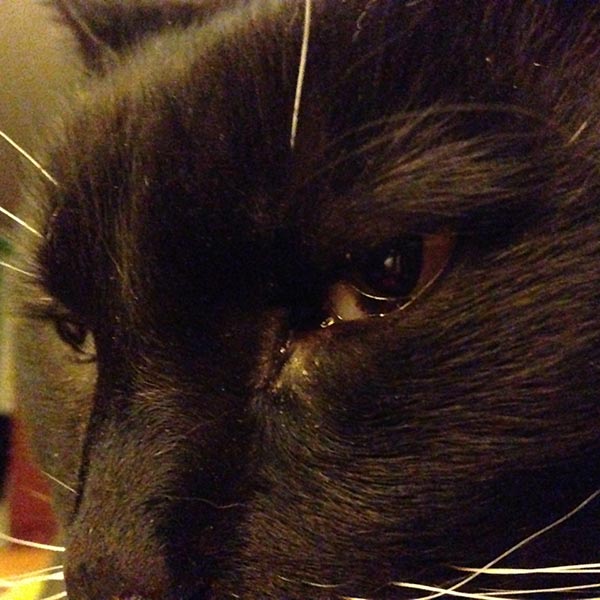
close up of black cat

My Dead Kitty and My Indifferent Lover Pay Me A Visit

by Peter Houle

Eyes closed,
I feel Midnight’s padded paws on my chest,
pushing me upright
as I fall forward on them:
an impossible game of trust between man-child
and white-booted black cat,
long in the ground where,
sobbing at 18,
I laid him with a can of tuna.
It’s late; I rush to the antiques market
with my books; postcards;
a pair of golden, old-man spectacles;
an 80s World Cup souvenir plate;
open my chair and my mind
to face my buyers and my dream,
for you were there, too;
but it was Midnight gently catching me
before I hit the ground.

Photo by Kate Whouley

colorful balloons on a white ceiling

Birthday Party Behavior

by Elana Margot Santana

When I was four, my mother caught me and my friend Nikki on the bathroom floor with our velvet dresses pulled up to our necks, our white tights pulled down to our ankles, and our bodies pressed together. This was my first experience of coming out.

“This isn’t birthday party behavior,” my mother said, standing in the doorway.

I don’t remember feeling ashamed, just interrupted. My mother’s response that day was more of a lesson in etiquette than anything else. I wasn’t being sinful or wrong—it was just rude of me to keep the other kids waiting.

Photo by Adi Goldstein on Unsplash


About the Writers

Peter Houle, a Vermonter, began planting seeds in Portugal seven years ago. You can find him at the Feira da Ladra, selling things he finds on the street or makes himself. He likes cats, obviously.

Elana Margot Santana is a writer, scholar, and visual artist living in the mountains of Colorado. Her work explores trauma, grief, queerness and multispecies embodiment. Recent publication credits include The Longridge Review and The Dewdrop.


The Quick Work series is curated by Multiplicity Executive Editor, Kate Whouley.

Quick Work words, colorful marbles, and a woman with big hair

Quick Work No. 7

Quick Work: Short Takes on Epic Truths

Here, in micro-flash nonfiction, writers make quick work of compelling stories.

water color of swirly marbles

On Becoming a Writer at 60

by Peter Welch

Words, birthed, tender and pink, 
welcomed into the world.
Words, at first whispering,
emergence only possible
because I love them all, 
or learn to. 
Words thrill me
as they roll off my tongue: 
Evanescence – Erudite – Equanimity
Gorgeous and tenacious words 
tumble out, cascade over, 
forging new topography,
resilient enough sounds, consonants and vowels
rubbing against each other, creating heat. 
A resonating trust begins its unfolding, 
one that urges the words 
to flush and flurry into existence,
reaching into paroxysms 
that rightly bring them forth.
Ephemeral or enduring, 
Exalted in their earthly reckonings,
and essential truths.   
Words, messy and mesmerizing, 
becoming. 

Watercolor, “Cat’s Eyes,” by the poet.

Hair Story

by Amie McGraham

Newlywed: She bleached her hair, the close-cropped jet black tresses enshrouded in a peroxide haze. I only saw it in a snapshot: my mother in a high-waisted leopard-skin bikini, lifeguard tower in the background. 

Divorcee: She’s 40. I’m 12. She’s sporting the Toni Tenille bowl cut, Frye boots, my great-grandmother’s mink coat, and a NOW bumper sticker on the bright blue ’57 Chevy pickup she later traded in for a Volvo station wagon.

Resident: She wheels out of the salon on the memory care unit, and I almost don’t recognize her beneath the poufy, all-white bouffant. But she knows me.

Photo of Monica Vitti, via Flickr


About the Writers

Amie McGraham grew up on an island in Maine. Her writing has appeared in anthologies and literary magazines including Brevity and Wild Roof Journal. Currently writing a novella-in-tweets, Amie also produces a weekly 100-word newsletter, the micro mashup.

Peter Welch is currently enrolled in the MFA Writing program at Bay Path University. He is also a watercolor artist and lives in Kittery Point, Maine, with his partner Michael and their rescue pup Dasher.


The Quick Work series is curated by Multiplicity Executive Editor, Kate Whouley.

Quick Work No. 6

Quick Work No. 6

Quick Work: Short Takes on Epic Truths

Here, in micro-flash nonfiction, writers make quick work of compelling stories.

Leading up to Multiplicity‘s second themed issue, we present five short takes on work and working. If you enjoy these bite-sized stories, check back for the feast of essays, profiles and poems in “Work,” launching online on November 18, 2020.

Melt

by Kara Knickerbocker

Sometimes I miss how solidly I walked in those steel-toe boots. I wore splotches of oil on my denim jeans and felt like art in my own body as I moved through the garage.

One scorching day that July, we three girls took our lunch break to get ice cream. Then we drove a little further, pulled the truck into a secluded field, rolled up our long jeans and stripped down into sports bras to even our tans. I remember the laughter stretching to the sky, how carefree in our double-scoop-sweet lives we were then.

Work Is Not Cancelled

by Marla Zlotnick

We are four people in tight quarters, donning masks and gloves at all times. There’s me, seasoned, focused, though not lacking in humor. There’s the polyamorous goth millennial regaling us with sexual escapades; the rock climbing childhood cancer survivor with a compulsion to hand feed chipmunks;  the middle-aged manager addicted to the phone.

Rules of quarantine are abbreviated. Physical distancing is impossible, afflicted employees cause temporary premises shutdowns for decontamination. But in Specialty Pharmacy, there’s no option for work from home. We prepare and deliver prescriptions to the vulnerable and underserved.

What’s essential is that they are not forgotten.


A Caddy and Death

by Ursula Saqui

My boss is impeccably dressed for the long drive to our monthly meeting. I’m in the passenger’s seat with a hole in my pantyhose, wiggling nonchalantly to unstick my exposed thigh from the Caddy’s leather.

On today’s agenda, we have a split penis, an exploded stomach, and a suicide.

I’m a state-contracted mortality review specialist, and after six years and over 2,000 cases, I feel relieved when people in their 80s just quietly pass away.

Overall, I hold up well watching people die on paper, until I break the cardinal rule of looking up their obituaries. Then I cry.

Financial Advice

by Meryl Baer

You’re withdrawing money from your IRA for your granddaughter’s breast implants?

You want to buy a penny stock because your daughter’s boyfriend’s father said it was a good deal?

You’re going to pay taxes and penalties on an early IRA withdrawal so you can take a cruise?

Your son told you the country’s financial system will collapse so you have to take out all your money, and he says don’t worry, he’ll take care of it for you?

So many times, I wanted to scream, “ARE YOU NUTS?”

But I could not.


Home Office, No Office

by Lilve García

I want to flirt with the idea that I am a full-time writer.
Sitting at my desk uninterrupted for a couple of hours, at least.
A cup of tea at hand, next to warm toast with cinnamon and honey. A soft, almost inaudible
Tibetan melody in the background. The beautiful flame tree of my neighbors displaying a full
bloom out my window. But then, five minutes later, my reality check. The little voice behind
the door, calling mama, that reminds me I am precisely the designated food provider of three
Charybdis. A full-time mom playing with words.


About the Writers

Kara Knickerbocker is the author of The Shedding Before the Swell and Next to Everything That is Breakable. She lives in Pennsylvania and writes with the Madwomen in the Attic. Find her online at karaknickerbocker.com.

Ursula Saqui lives in the Midwest with her family, where she is always cold and hates sitting still. She can be found almost everywhere @UrsulaSaqui, chatting about running, writing, and food.

Meryl Baer worked for a financial firm, eventually quit and moved to the New Jersey shore. Her recent stories have been published in Pomme Journal and Perspectives Magazine. Her blog, Beach Boomer Bulletin, is published at merylbaer.com.

Marla Zlotnick, a native of western Massachusetts, was happy to return home from Boston when she made a midlife career change from advertising to healthcare. Her contribution to Quick Work marks her first journal publication.

Lilve García is an emerging writer from the Dominican Republic who recently published her first volume of poetry, Poemas Tempranos. She has three kids, a degree in architecture, and an interest in science fiction.


The Quick Work series is curated by Multiplicity Contributing Editor, Kate Whouley.

Submissions to Quick Work are currently closed, but we always welcome submissions for Multiplicity Blog. More details here.

Quick Work No. 5

Quick Work No. 5

Quick Work: Short Takes on Epic Truths

Here, in micro-flash nonfiction, writers make quick work of compelling stories. During July 2020, we present short takes on work and working.

The Boys Department

by Michele Wick

After Grandpa died, Grandma became a sales lady at Alexander’s Department Store. At 70 years old, she had her first job. Grandpa never let Grandma work outside the home, although he’d let her play poker for rent money.

At Alexander’s, they believed Grandma was 55, and offered her a buyer’s job. But my elegant, five-foot tall Polish grandmother preferred the boys department, where she worked for 25 years.

On my wedding day, Grandma told me that I had nice “bubbies.” She also said that I could accomplish anything.

Sometimes, I forget this, and her, until I remember and press on.

Managed Care

by Gerard Sarnat

I wanted to make a difference. As an MD-CEO, my idea was to run that new health plan so members would get value for their hard-earned bucks. But the Board did not distinguish between providing care and inventorying boxes of Kleenex.

When someone instructed staff on how to manage customer expectations, I wondered, weren’t they patients anymore?

I learned that appeals were shamelessly disappeared, never to be ruled upon. My naïve ideals were disappeared too.

Our worthiness had quickly deteriorated.

I quit and went back to being a physician.


Pine Ridge Reservation, 1999

by Wren Bellavance-Grace

“Give these to the needy,” the note demands.

Not this one, I think, discarding the coat with a gerrymandered-county-shaped stain. 

I expected Volunteer Vacation to be sweaty, grueling, heavy work. Instead: “Sort donations in the attic.” Sweaty? Definitely. Useful? We’ll see.

Scores of boxes—dog-eared books, chipped mugs, clueless INDIANS jerseys. And some useful things. I map out the newly organized attic, but nobody cares. It gets reorganized every volunteer vacation week. My work doesn’t matter. 

My pride stings through stages: hurt, frustration, confusion. 

Humility.  The heavy work was for me, I realize: to understand the burdens of receiving.

Not Eve
 

by Iris Reinbacher

“Hi, my name is Adam, and I’m such a lonely guy!”

I’d just introduced myself to the postdoc I was supposed to work with on the database part of my thesis project. I smile uncertainly—surely, he only wants to be funny, in his awkward, nerdy kind of way.

“How old are you?” he asks.

“Twenty-eight.”

“Aahh!” he points a finger at me. “Your biological clock is ticking!”

We’ll work together for the next two and a half years. We’ll become colleagues. But we’ll never talk about the day we met, or mention ticking clocks again.


That Time I Thought I Knew Better

by D.A. Stern

Bantam Books, 1983, New York City, most of the company away at a conference. A young editor, I was on duty to receive the foreword to Lonesome Gods, one of Bantam’s next big books. Written by Louis—100 published novels, 320 million copies in print—L’Amour.

The fax came in.

I decided it wasn’t proper English. I would clean it up.

It got worse. I worked harder. It got much worse. I called my boss, the legendary Irwyn Applebaum.

“Dave, what the f*** are you doing? Just leave it alone.”

And I did. I left it Louis L’Amour.


About the Writers

Michele Wick, PhD writes about the confluence of art, science, the humanities and climate change. She is a Lecturer in Psychology at Smith College. You can read her blog Anthropocene Mind at Psychology Today.

Gerard Sarnat, MD is a physician and award-winning poet who has published four collections. His work has appeared in Main Street Rag, New Delta Review, Texas Review, Brooklyn Review, LA Review, San Francisco Magazine, and The New York Times.

Wren Bellavance-Grace is a writer based in western Massachusetts currently finding the non-working experience of sabbatical deeply disquieting. She holds an MFA in Creative Nonfiction from Bay Path University.

Iris Reinbacher is a writer and Austrian computer scientist turned entrepreneur. She has lived in six countries in Europe and Asia before settling down in Kyoto, Japan.

D.A. Stern is the author of more than two dozen works of fiction and non-fiction, including The New York Times bestsellers Crosley and The Blair Witch Project Dossier, and the acclaimed epistolary novel Shadows In The Asylum.


The Quick Work series is curated by Multiplicity Contributing Editor, Kate Whouley.

Submissions to Quick Work (100 words or fewer) are currently closed, but we welcome stories (up to 5,000 words) for the Fall issue of Multiplicity Magazine: At Work. Magazine submissions close on September 25, 2020. More details here.

Quick Work No. 4

Quick Work No. 4

Quick Work: Short Takes on Epic Truths

Here, in micro-flash nonfiction, writers make quick work of compelling stories. During July 2020, we present short takes on work and working.

The Chaplaincy

by Rich Giptar

I worked in a room with willow crosses and laminated mantras on the walls, comfy mismatched chairs and crumb-dotted rugs. Tea and coffee were always on tap, and a variety pack of biscuits was open on the purple camping table. It was a strange enclave in the otherwise streamlined university building.

I listened to students and staff unpack and pile up their problems like cairns. With my chair at an obtuse angle (this was important), I offered gentle affirmation. Sometimes the men would grow flirtatious and I would stiffen. I realized they confused the listening, the emotional honesty, for love.

Port-Starboard Cake

by Grace Giesbrecht

When the massive white sails were hauled tight against the wind, the tall ship tilted, and the kitchen I worked in tilted too. I learned to cook standing barefoot at a 45 degree angle, with one hip jammed into the cabinets and the opposite foot braced against the far wall.

Cakes made under these conditions were known by the wild-eyed and strong-minded cooks who came before me as port-starboard cakes: they baked on the ship’s tack and the wind’s rules, and tasted better for it.


Desayuno

by Dali Vera

Five minutes to fry eggs before I leave for the police station. I put the oil on high, take the eggs out of the fridge. They sizzle, start solidifying. I count each minute down to four. Now my sneakers are on, the eggs are over easy, and I am plating the sausage and pancakes, calling my daughter.

“Jade, te amo, made your favorites.”

Give her a hug, grab my keys, dial my partner from the social service agency. “What’s your ETA?”

“Just shoving breakfast down. What’s the allegation?”

“Sexual abuse.”

I think I hear him choking.

“I’ll be right there.”

Who’s the Boss?

by Tain Leonard-Peck

Machete, sledgehammer, brush-cutter, rake.

The summer sun sears the land, baking the soil dry and burning my skin like newspaper in a fireplace. Water for the equipment goes in the bed, along with a roll of fencing. Next come the mowers, awkwardly loaded, weight shifting constantly. I get scratched by a hot horn.

The tailgate shuts with a satisfying click. I look up, locking eyes with one of my workers. Curious and vibrant, always hungry.

Goatscaping.

In theory, the goats work for me.


Not Working

by Erika Rundle

I was three days out. The first two felt like breathing clean air into starved lungs. My head tilted higher by several degrees. Inexplicably, my peripheral vision had expanded—I could see clearly out of the corners of my eyes. I took a walk and felt that I could continue indefinitely.

The following day was rainy. I was caught off balance by a depth charge. The waves threw me against a rocky beach, abandoned and littered with garbage. I turned things over, confirming their absolute uselessness.

Don’t wait so long next time, I thought. Just quit at the first sign.


About the Writers

Rich Giptar is a writer from southern England who has held a variety of jobs. Their work has appeared in Perhappened, FlashFlood, Teen Belle and Versification. Tweet @richgiptar.

Grace Giesbrecht is a Media/Communications Major at Trinity Western University. She spent a summer as a cook on a tall ship on the Pacific Ocean, sailing along the coast of British Columbia.

Dali Vera writes about balancing her family life with her work in social services. She has taught English as second language and is a first-year student in the Bay Path MFA in Creative Nonfiction program.

Tain Leonard-Peck is a high school student and world traveler who currently lives on his family’s farm on Martha’s Vineyard. He writes, paints, and composes music, and is a competitive sailor, skier, and fencer.

Erika Rundle is an independent scholar and creative writer. Her essays and reviews have been published in numerous journals and anthologies. She also works as a teacher, translator, dramaturg, and performer for theater and film.


The Quick Work series is curated by Multiplicity Contributing Editor, Kate Whouley.

Submissions to Quick Work (100 words or fewer) are currently closed, but we also welcome stories up to 5,000 words for the Fall issue of Multiplicity Magazine: Work/Working/Worker. More details here.

Quick Work No. 3

Quick Work No. 3

Quick Work: Short Takes on Epic Truths

Here, in micro-flash nonfiction, writers make quick work of compelling stories. During July 2020, we present short takes on work and working.

Graveyard Shift

by Marlin Brezzi

Bing went to meet his maker before any of us were born, but those who came before us said he’d been laid to rest with a mouthful of silver fillings and more gold chains than a Mafia don. It would be so easy, we speculated, standing in the shed where we kept the excavators, mowers and shovels. Just unscrew the bronze plaque covering the mausoleum door, roll him out and open the casket. Ed swore that he’d do it one day.

That was 22 years ago. I wonder if Bing has held on to his treasure.

Safe Space

by Jennifer Laurenza

The coffee-colored couch in my office can barely accommodate one average-sized human curled in a fetal position, but this is where I find myself after a taxing session. A psychotherapist and reluctant empath, I can neither un-know nor un-feel the intimate details of suffering, trauma, and loss that have infused my work for two decades. I absorb the darkness. It permeates my dreams, dampens my passion, and induces morning dread. Oh, there are the sessions that make me feel warm inside, like I’ve sipped a cup of hot tea. But today, the couch beckons, and I surrender to its comfort.


Mom, Dancing

by Karen Taub

One of my best days at work as full-time grilled-cheese-sandwich maker, homework tutor, boo-boo kisser, TV warden, and part-time Scheherazade in purple, red and gold sparkles, was when the little girl sitting cross-legged in the front row at the Girl Scout Jamboree stared googly-eyed at me on stage, dancing and playing finger cymbals, and announced “She’s beau-ti-ful.” She wasn’t seeing the wrinkles and the worries, the mini-van driving, mortgage-paying mortal, but the reflected possibilities of her future, a woman feeling good in her skin while kids, Dad and the dinner dishes wait at home.

Too Many Clinks

by Michael Ball

Until I stood for hours, suddenly skilled in snapping and twisting lids on gallon jugs. I never considered the malice of mayo jars. It was a college gig for me, working at John E. Cain’s atavistic factory, hidden off drab backstreets over by MIT. Only men worked the line, packing condiments, including of course, the mayonnaise named on the giant neon towering over the Charles River. And all the men were deaf. The old-timers went deaf from filling and sealing glass jars pushed along on jiggling tables, all careening toward filling machines. Clink. OK. Ten clinks. OK. Thousands. Eh, what?


A Quick Start Guide to Deferred Compensation

by Kate Gonzalez Long

A Quick Start Guide To Deferred Compensation by Kate Gonzalez Long

About the Writers

Marlin Bressi is the author of four nonfiction books, including Hairy Men in Caves: True Stories of America’s Most Colorful Hermits and Pennsylvania Oddities. His fiction has appeared in Suspense Magazine, Capsule Stories, 365 Tomorrows and other publications.

Jennifer Laurenza is a practicing psychotherapist who writes for self-preservation and creative expression. She specializes in LGBTQ mental health, and is an advocate for the LGBTQ community and other marginalized populations.

Karen Traub is currently writing a memoir about her local library. A student in the Newport MFA program, Karen has been published in Brevity, Straw Dog Writers Guild Pandemic Poetry and Prose Voices of the Valley.

Michael Ball scrambled from newspapers through business and technical publications and into creative writing. One of the Hyde Park Poets, he has published in Griffel, Gateway Review, Havik Anthology, SPLASH!, Peregrine Journal, and In Parentheses.

Kate Gonzalez Long is an elderly Abolitionist Feminist living and writing in Los Angeles.


The Quick Work series is curated by Multiplicity Contributing Editor, Kate Whouley.

Submissions to Quick Work (100 words or fewer) will close on July 15. We also welcome stories up to 5,000 words for our work-themed Fall issue of Multiplicity Magazine. More details here.

Quick Work No. 2

Quick Work No. 2

Quick Work: Short Takes on Epic Truths

Here, in micro-flash nonfiction, writers make quick work of compelling stories. During July 2020, we present short takes on work and working.

Escape

by L’Tanya Durante

I stripped down to the swimsuit I wore underneath my protective gear, imagining my body under attack by asbestos fibers—and by the stares of the all-male abatement crew.

I’ve told myself I quit that job after only six months because I was afraid of a future that looked like the man who spoke to us at the training, with his raspy voice and oxygen tank. It’s more palatable than admitting that a body potentially ravaged by asbestos worried me less than a body invaded by self-doubt and hatred, a body that might be unpleasing to men.

Daddy Was a Baker

by Karol Jackowski

Daddy was a baker because his Daddy was a baker, leaving him the Normal Bakery in East Chicago, Indiana. We lived above the bakery with donuts for breakfast, cupcakes for the whole class on my birthday. At age three, I was putting chocolate sprinkles on butter cookies. Truth is Daddy felt born to be a dentist, and the Normal Bakery drove him to drink. Mom closed the bakery when Daddy went into the hospital, and we all swore off family businesses forever. Now, only the sweetest memories remain of being a baker’s daughter, and I still eat donuts for breakfast.


New Guy by John Sheirer

New Guy

by John Sheirer

When I started working at an ivy-covered New England college, I discovered how cold those ancient buildings are. One day, as I warmed my hands on the humming photocopier, the fire alarm blared. Assuming it was a drill, I strode to my little office and opened the door to find billowing smoke and my cheap, plastic space-heater melting into the shape of a defeated alien invader in a low-budget sci-fi movie. In the coming weeks, I discovered how long the stench of burned plastic lingers, how cozy an office sweater is, and how quickly good colleagues forgive the new guy.

Shell

by Anita Kestin

It fell to me to inform the 18-year-old-girlfriend of one of our patients that he had tested positive for HIV. He wanted her to know, but he did not want to tell her. When I broke the news, she reached into her handbag. Out came a bottle of nail polish. She carefully began to paint her nails with a shell-pink shade.

“Do you have any questions?”

She was quiet for a moment, then blew on her nails.

“No,” she said, picking up the polish and leaving the room.


Request from the Bandstand
[a Fibonacci poem]

by Jean Fineberg

It’s
my
calling
to play tunes
fondly remembered
from your wild and free salad days
bring on the requests, but please don’t ask for one more tune.
Sure, I’m digging playing rock star
but I gotta go
and take my
fifty
bucks
home.


About the Writers

L’Tanya Durante lives and writes in Durham, North Carolina. She loves reading and writing flash nonfiction and several of her “Tiny Truths” have been published in Creative Nonfiction Magazine. She is on Twitter @writeordiegirl.

Karol Jackowski is a member of the Sisters for Christian Community. Her books include Ten Fun Things to Do Before You Die, Forever and Ever, Amen, and Sister Karol’s Book of Spells, Blessings, and Folk Magic.

John Sheirer lives in Northampton, Massachusetts, and teaches at Asnuntuck Community College in Enfield, Connecticut. His most recent book is Fever Cabin, a fictionalized journal of a man isolating himself during the current pandemic. JohnSheirer.com.

Anita Kestin, MD, MPH, has worked in academic settings, nursing homes, hospices, and the locked ward of a psychiatric facility. She is a daughter (of immigrants fleeing the Holocaust), wife, mother, grandmother, and a progressive activist.

Jean Fineberg is an award-winning saxophonist who has studied poetry with Kim Addonizio. Her work has been published in Soliloquies, Vita Brevis, Uppagus, Literary Yard, Flagler Review, Riza Press, High Shelf Press, Shot Glass Journal and Fibonacci Review.


The Quick Work series is curated by Multiplicity Contributing Editor, Kate Whouley.

Submissions to Quick Work (100 words or fewer) will close on July 15. We also welcome stories up to 5,000 words for our work-themed Fall issue of Multiplicity Magazine. More details here.

Quick Work No. 1

Quick Work No. 1

Quick Work: Short Takes on Epic Truths

Here, in micro-flash nonfiction, writers make quick work of compelling stories. During July 2020, we present short takes on work and working.

Summer 1980s
Roach Trap Line

by María Luisa Arroyo

I twisted orange earplugs in to muffle the cacophony of conveyor belts. One roaring belt pushed shampoo bottles down the line as nimble women’s hands like my mother’s picked them up, four at a time, to pack. Newbies like me started on the roach trap line, alcohol fumes pinching our noses. We dipped long-stemmed Q-tips (like the ones they’re now using up people’s noses to test for COVID-19) into alcohol. Then we pushed the peeping yellow poison back into black roach traps. Full-timers moved on to pack vitamins. Summertime workers like me, though, stayed here on tall stools, eyes burning.

Quickening
 

by Chelsea L. Smith

I push the body pillow aside and press my belly into my husband’s back while he sleeps. Already, he’s aware of the baby. He leans into me ever so slightly, a subconscious turn of affection, and moans.

 “Can you feel Loren moving?” I whisper into the rough hairline at the nape of his neck.

“No,” he mumbles, half-asleep, “but I like the idea that he’s there.”


Roberto

by Pamela Lear

The 14 boys prepared to leave after a creative writing lesson on Mark Twain. As the guard arrived to escort them to math class, they each stood in “safety position” with arms crossed as if shielding their chests, hands clasping the shoulders of matching prison-issue T-shirts. The young men shuffled through the open security door, looking down at the floor. A boy named Roberto, 15-years-old and a foot taller than me, surreptitiously glanced up and whispered, “Hey teacher, want to put me in your purse and take me home?” He winked at me, and then they were gone.

On Keyboard

by Clifton J. Noble

Practicing the piano as a five-year-old, I had no inkling that I was preparing for my life’s work.  I was doing something I loved—reading and speaking a language shared by musicians for centuries, opening doors to other worlds as surely as a reader of books travels via the printed word.  Five decades later, I perform and record using the same 88 keys, thankful and amazed that my employers’ checks are being deposited in my bank account. Doing what I love and getting paid for it? That ain’t workin’.


Wrong Team

by Maria Smith

He kept his graying hair slicked back, dressed in three-piece suits with expensive silk ties. He wore shiny, black leather shoes and overpowering cologne, which always arrived before he did. He was the boss at the satellite office of a national insurance company. An executive assistant in my early twenties, I was one of four women who reported to him. Sometimes during late afternoons, he would call us into his office, joking around, coaxing us to sit on his lap. While the others fawned over him, I refused. “You aren’t a team player,” he said, when he fired me.


About the Writers

Born in Manatí, Puerto Rico and raised in Springfield, MA, poet María Luisa Arroyo pays tribute to thirty-two women poets in her latest original collection, Destierro Means More than Exile.  She is an Assistant Professor at Bay Path University.

A recent graduate of the Stonecoast MFA program, Chelsea Smith is working on a series of essays that celebrate the joys and difficulties of growing, delivering,  and protecting life during a time of isolation and physical distancing.

Pamela Lear lives with her husband in Miami, where she is thrilled to have grandchildren nearby. A first-year student in the MFA in Creative Nonfiction at Bay Path University, she is following the Narrative Medicine track.

Clifton J. Noble is a composer, arranger, performing musician, and music critic who works in musical genres ranging from art music to rock n’ roll. He serves as the Staff Accompanist for the Smith College Music Department.

Maria Smith is a writer and multi-media artist living in Bluffton, South Carolina. She holds an MFA in Creative Nonfiction and a PsyD in Conflict Resolution & Mediation.  She served for 16 years as an officer in the Air Force Reserve.


The Quick Work series is curated by Multiplicity Contributing Editor, Kate Whouley.

Submissions to Quick Work (100 words or fewer) will close on July 15. We also welcome stories up to 5,000 words for our work-themed Fall issue of Multiplicity Magazine. More details here.